

Porcelain and ceramic tile can look almost identical in a showroom, but they are not always interchangeable. The right choice depends less on which one is “better” and more on where the tile is going, how much traffic and moisture it will see, and what you want to spend on the finished project.
For most Florida homeowners, porcelain is the safer all-purpose choice for floors, showers, high-traffic areas and many outdoor applications. Ceramic is often the smarter value for backsplashes, bathroom walls, feature walls and other areas where extreme durability is not necessary.
Quick answer: porcelain vs. ceramic tile
Choose porcelain when durability, moisture resistance and versatility matter most. Choose ceramic when you want an attractive, easy-to-maintain tile for walls, backsplashes or lighter-duty residential spaces — often at a lower material and installation cost.
| Feature | Porcelain Tile | Ceramic Tile |
|---|---|---|
| Best for | Floors, showers, high-traffic rooms, many outdoor applications | Backsplashes, walls, shower walls and residential floors when appropriately rated |
| Water absorption | Very low — porcelain is classified at 0.5% water absorption or less | Generally more porous than porcelain |
| Durability | Extremely hard and resistant to everyday wear | Very durable for the right residential application |
| Cutting & installation | Harder to cut and may require more specialized tools | Usually easier to cut and work with |
| Typical cost | Often higher, especially for large-format or premium designs | Often more budget-friendly, although premium ceramic can cost more than basic porcelain |
The simplest rule: for a hard-working floor or a wet environment, start your search with porcelain. For a backsplash or wall, don't pay extra for porcelain unless you specifically prefer the design.
How porcelain and ceramic tile are different
Porcelain and ceramic are close relatives. In fact, porcelain is technically a type of ceramic tile. Both begin with clay and other natural materials that are formed and fired at high temperatures.
The important difference is density and water absorption. Porcelain is manufactured to be especially dense and must absorb 0.5% water or less to meet the porcelain classification. That low absorption helps make porcelain an excellent choice for demanding environments.
Traditional ceramic tile is generally more porous and somewhat easier to cut. A glazed ceramic tile can still handle water extremely well on its surface, which is why ceramic has been successfully used on bathroom walls, showers and kitchen backsplashes for generations.
For a homeowner, you can think of the difference this way:
- Porcelain: tougher, denser and better suited to demanding applications.
- Ceramic: easier to work with, often less expensive and excellent when maximum durability isn't necessary.
That doesn't mean every porcelain tile belongs everywhere or every ceramic tile is delicate. Always check the individual tile's floor, wall, wet-area, slip and exterior ratings before making the final decision.
Where each one shines
Kitchen floors: porcelain usually wins
Kitchens deal with dropped pans, chairs, pets, spills and constant foot traffic. Porcelain's density and durability make it our first choice for most kitchen floors.
Porcelain also gives homeowners an enormous design range. Modern porcelain can convincingly reproduce hardwood, marble, travertine, limestone, concrete and other materials without bringing along the maintenance requirements of the original material.
Kitchen backsplashes: ceramic is often the smarter buy
A backsplash doesn't have to survive the abuse that a floor does. That's where ceramic makes a lot of sense.
Glazed ceramic subway tile, handmade-look tile and decorative ceramic are easy to clean, available in a huge range of colors and shapes, and generally easier to cut around cabinets, outlets and corners.
Spending more for porcelain on a backsplash doesn't necessarily give you a meaningful performance advantage.
Bathroom floors: lean toward porcelain
For bathroom floors, we generally prefer porcelain because of its low water absorption and durability. But the material is only part of the decision. Slip resistance and the tile's intended application matter just as much.
A highly polished porcelain tile may not be the right choice for a wet floor simply because it is porcelain.
Shower walls: both can work
Porcelain and properly rated glazed ceramic can both be excellent choices for shower walls.
If you find a ceramic wall tile you love, don't reject it simply because it isn't porcelain. The waterproofing system behind the tile, correct installation and proper maintenance are more important than choosing porcelain purely for the name.
Shower floors: think beyond porcelain vs. ceramic
For a shower floor, focus on a tile specifically rated for the application. Smaller tiles and mosaics are common because the additional grout joints provide traction and allow the tile to follow the slope toward the drain.
The safest question isn't simply “Is it porcelain?” It is “Is this specific tile appropriate for a shower floor?”
Living rooms and whole-home floors: porcelain
This is where porcelain really shines, especially in Florida.
Large-format porcelain can create a clean, continuous floor through kitchens, living areas and hallways. Wood-look porcelain gives you the warmth of a plank floor without worrying about humidity, wet shoes, sandy feet or water the way you might with real wood.
Outdoor spaces: usually porcelain, but check the rating
For exposed patios, lanais and other exterior applications, we generally start with porcelain because of its low water absorption. But don't assume that every porcelain tile is automatically an outdoor tile.
Choose a product specifically approved for exterior use and pay close attention to surface texture and slip resistance. Some ceramic products are also designed for covered patios and similar applications, so the individual product rating always matters.
Cost reality check
People often hear that ceramic is cheap and porcelain is expensive. That's directionally true, but it is too simplistic to make a buying decision from.
The price of a tile can vary dramatically based on size, country of manufacture, finish, design, rectification, color variation and whether the product is being discontinued or cleared out. A beautiful ceramic tile can easily cost more than an aggressively priced porcelain tile.
And the tile itself is only part of the budget.
Think about installed cost, not just price per square foot. Large-format porcelain can require more floor preparation, more expensive mortar, a leveling system, specialized cutting equipment and additional labor. Ceramic is generally easier to cut and handle, which can make installation less expensive — particularly for complicated backsplashes and wall layouts.
At Tile Outlets of America, you'll often find first-quality porcelain priced close to — and occasionally below — ceramic sold through traditional retail channels. That makes it worth comparing the actual products you like instead of eliminating porcelain based on the assumption that it will automatically be too expensive.
Care and longevity
One of the best things about both porcelain and ceramic tile is how little maintenance they require.
For normal cleaning, sweep or vacuum loose dirt and clean the tile with a neutral tile-safe cleaner. Avoid abrasive cleaners unless the manufacturer specifically recommends them.
Most glazed ceramic and porcelain surfaces do not need routine sealing. Grout is a different story: traditional cement-based grout may benefit from sealing, while some newer grout products have different maintenance requirements.
Installed correctly, either porcelain or ceramic tile can last for decades. In many homes, the bigger threat to a tile installation isn't the tile itself — it's movement or cracking in the substrate, inadequate waterproofing, poor mortar coverage or incorrect installation.
That's especially important with today's larger tile formats. A great tile installed over a poorly prepared floor can still fail.
Top porcelain and ceramic tile picks at Tile Outlets of America
Not sure where to start? These four products show just how different porcelain and ceramic can look — and where each material makes sense.
Walkyria Maple 8x48 Wood Look Porcelain Plank Tile
Best for: Whole-home floors, kitchens and living areas.
If you like the warmth of hardwood but want the durability of tile, Walkyria Maple is a great example of what modern wood-look porcelain can do. The long 8x48 plank format creates a convincing wood-floor effect while keeping the low-maintenance performance of porcelain.
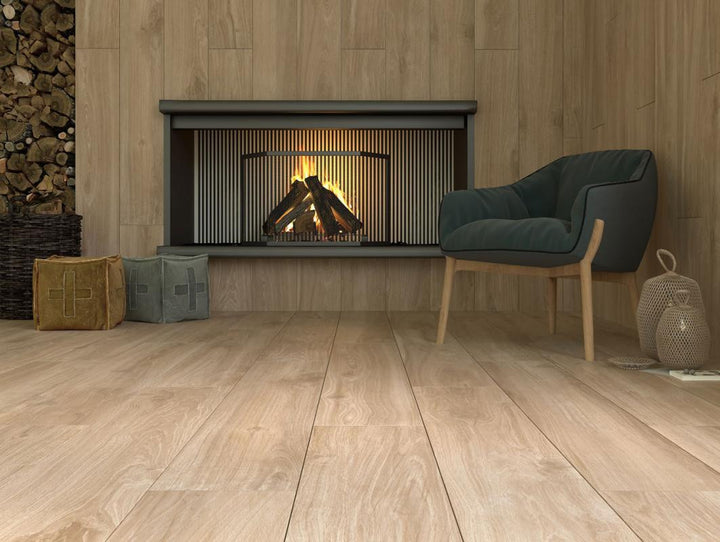 Walkyria Maple 8x48 Wood Look Porcelain Plank Tile
$8.75
Walkyria Maple 8x48 Wood Look Porcelain Plank Tile
$8.75
Onyx Reale 24x48 Cream Onyx Look Porcelain Tile
Best for: Large-format floors, bathrooms and statement spaces.
Onyx Reale shows why porcelain has become such an important design material. It delivers the movement and visual depth of exotic stone in a dramatic 24x48 format without the maintenance demands of natural onyx.
 Onyx Reale 24x48 Cream Onyx Look Porcelain Tile
$24.72
Onyx Reale 24x48 Cream Onyx Look Porcelain Tile
$24.72
Vancouver Sand 12x24 Ceramic Floor Tile
Best for: Value-conscious residential floors and warm neutral interiors.
Vancouver Sand is a good reminder that ceramic isn't limited to small wall tile. A properly rated ceramic floor tile can be an attractive, practical option when the application doesn't require the extreme performance characteristics of porcelain.
 Vancouver Sand 12x24 Ceramic Floor Tile
$1.88
Vancouver Sand 12x24 Ceramic Floor Tile
$1.88
Natural Branco Glossy 3x6 Ceramic Subway Tile
Best for: Kitchen backsplashes, bathroom walls and shower walls.
This is exactly where ceramic makes sense. A classic glazed 3x6 subway tile is easy to clean, easy to design around and doesn't need the added density of porcelain to perform beautifully on a wall.
 Natural Branco Glossy 3x6 Ceramic Subway Tile
$0.29
Natural Branco Glossy 3x6 Ceramic Subway Tile
$0.29
So, is porcelain or ceramic better?
Neither material is automatically better. Porcelain is better when you need maximum durability and moisture resistance. Ceramic is often better when you don't.
If you're choosing a whole-home floor, kitchen floor, high-traffic surface or demanding wet-area application, start with porcelain tile. If you're designing a backsplash, bathroom wall, shower surround or another decorative surface, take a serious look at ceramic tile before paying more for performance you may never use.
And if you're still unsure, bring your room measurements, photos and design ideas to a Tile Outlets of America Flooring Supercenter. Our tile experts can help you compare the products in person and make sure the tile you love is actually rated for the job you want it to do.